
A motor vehicle collision disrupts your routine within a split second, confronting you with sudden shock, confusion, and urgent decisions. Navigating those initial minutes effectively is vital for protecting personal safety, complying with legal duties, and preventing costly complications later. When your vehicle comes to an abrupt halt, your immediate instinct should always center on establishing physical security for everyone in the cabin and preventing secondary crashes with oncoming traffic.
Secure the Perimeter and Mitigate Secondary Roadway Hazards
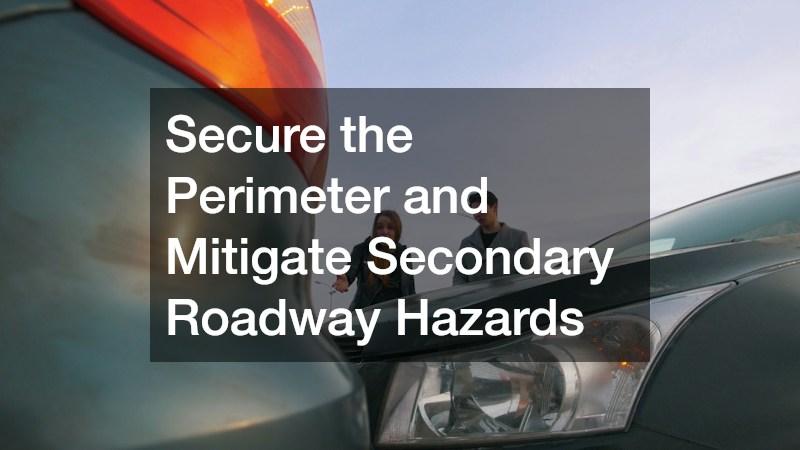
Before attempting to evaluate body damage or inspect the mechanical state of your vehicle, you must minimize exposure to passing traffic. Busy thoroughfares, low-visibility conditions, and blind corners present substantial dangers immediately following a wreck. Follow these vital measures to create a safer environment:
- Shift the transmission into park, engage the emergency handbrake, and immediately turn off the ignition to prevent potential fire hazards caused by damaged fuel lines or electrical shorts.
- Turn on your emergency hazard flashers right away to alert approaching motorists from a distance.
- Check every occupant in your vehicle for visible trauma, severe bleeding, or complaints of head, neck, and spinal discomfort before attempting any movement.
- If the vehicle remains drivable and is trapped in an active travel lane, carefully maneuver it toward the nearest paved shoulder or emergency breakdown lane.
- Deploy reflective emergency triangles, road flares, or high-visibility markers behind your vehicle if you carry them and if stepping onto the roadside can be executed without risking your life.
- Exit the vehicle through doors that face away from oncoming traffic, directing all passengers to wait behind roadside guardrails or on high embankments rather than lingering near the road surface.
- Remain mindful of fuel vapors, leaking fluids, and downed electrical lines that could pose sudden ignition risks.
Contact Emergency Services and Provide Critical Dispatch Details
Once you have repositioned away from active traffic, your next priority is summoning emergency responders. Even when an incident seems minor, notifying law enforcement establishes an official timeline and facilitates an objective assessment. When you dial emergency dispatch, deliver structured information clearly:
- State your exact geographical coordinates, noting nearby highway mile markers, cross streets, visible exit ramps, or distinctive roadside landmarks.
- Report the total number of vehicles involved, along with estimated counts of injured individuals and any visible symptoms of distress.
- Mention whether airbags deployed, whether any passengers are pinned inside vehicles, or if visible smoke or leaking fluids are present.
- Inform dispatch about secondary roadway blockages, such as disabled cars obstructing lanes or debris scattered across the asphalt.
- Request immediate medical units if anyone reports dizziness, blurred vision, acute spinal pain, or difficulty breathing.
- Follow all verbal instructions from the dispatcher, staying on the line until they explicitly authorize you to end the call.
Critical Information Exchange and Scene Documentation
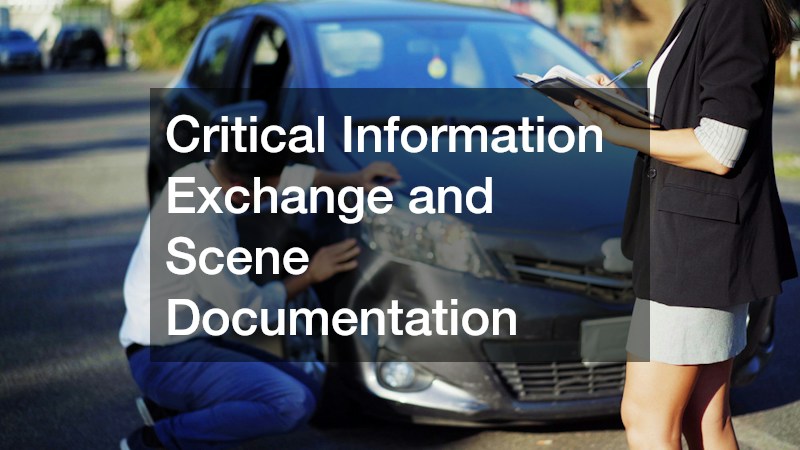
The minutes immediately following an impact present your best opportunity to compile factual details about the crash. Memories fade, vehicles move, and environmental conditions change, making structured on-scene documentation indispensable for your personal records and legal protection.
Collect Driver Details and Witness Accounts
Engaging with other motorists requires a calm, strictly objective demeanor. The adrenaline surges typical after collisions can elevate tempers, so maintaining emotional control helps prevent unnecessary friction. During this conversation, systematically collect vital records:
- Record the other driver’s full legal name, permanent physical address, phone numbers, and email address.
- Document the policyholder name, policy number, and carrier contact information, taking note of whether the driver maintains coverage through established local auto insurance agencies or regional carriers.
- Photograph the other motorist’s driver’s license and valid insurance card directly, verifying that the expiration dates are current.
- Note the year, make, model, color, and license plate number of every vehicle involved in the collision.
- Approach uninvested witnesses who observed the incident, politely asking for their names, phone numbers, and brief summaries of what they saw.
- Avoid discussing perceived fault, apologizing, or making speculative comments about vehicle speeds or braking distances.
Capture Comprehensive Visual and Environmental Records
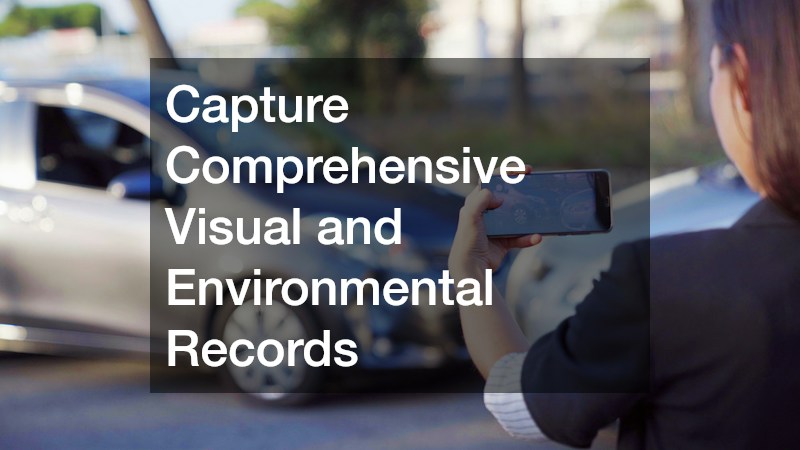
Your smartphone camera is one of the most effective tools for preserving physical context that might otherwise vanish once the road clears. Take numerous high-resolution photographs and short video clips from varying angles before vehicles are moved:
- Frame wide-angle shots illustrating the overall collision geometry, relative vehicle positions, and lane positioning.
- Capture close-up images of all exterior vehicle damage, taking care to photograph scratch patterns, bumper fractures, wheel rim scuffs, and shattered glass.
- Record visual evidence of skid marks, fluid trails, dislodged debris fields, and gouges on the roadway surface.
- Document surrounding traffic control features, such as regulatory stop signs, traffic signal phases, lane striping, and temporary construction signage.
- Photograph prevailing environmental conditions, including wet asphalt, standing puddles, glare angles, heavy fog, or overhead tree cover.
- Take clear pictures of vehicle interiors, showing deployed airbags, seatbelt pretensioner states, and loose cargo displacement.
Managing Post-Accident Vehicle Recovery and Towing Logistics
Once law enforcement and emergency personnel complete their initial roadside assessments, attention shifts toward removing disabled machinery from the roadway. Securing prompt, responsible towing prevents further vehicle damage and safeguards you against unreasonable storage penalties.
Oversee Safe Vehicle Transport and Facility Destination Selection
Having an undrivable automobile stranded on a shoulder creates ongoing vulnerabilities. Engaging trusted local towing services ensures your vehicle is hoisted and secured using proper dollies, flatbeds, or wheel lifts to prevent drivetrain damage. When coordinating recovery, adhere to these essential guidelines:
- Ask the wrecker operator for complete identification, company credentials, fee schedules, and insurance certificates before allowing hooks to touch your chassis.
- Request a flatbed carrier if your vehicle features an all-wheel-drive configuration, low ground clearance, or severe suspension failure.
- Direct the operator to transport your vehicle straight to a certified auto body shop rather than an unregulated impound lot where daily fees accumulate rapidly.
- Remove personal valuables, emergency supplies, electronics, toll passes, and vehicle registration cards from the interior before the carrier departs.
- Obtain a detailed invoice receipt listing the driver’s signature, truck identification number, departure timestamp, and destination facility address.
- Verify whether your existing auto club membership, credit card perks, or roadside assistance package offsets the towing charges.
Protecting Your Physical Well-Being and Seeking Medical Care
The physiological forces unleashed during an automobile crash impose tremendous stress on the human skeleton, muscular tissues, and internal organs. Adrenaline and shock routinely mask significant soft-tissue tears, joint displacements, and neurological trauma, making immediate professional evaluation essential.
Undergo Comprehensive Clinical Screening for Latent Injuries
Many vehicle occupants decline ambulance transport because they do not see blood or feel acute agony at the scene. However, underlying whiplash, micro-concussions, and spinal misalignments can take dozens of hours to manifest noticeable distress. Take these clinical steps without hesitation:
- Visit an emergency room, urgent care clinic, or primary physician within the first twenty-four hours, regardless of your immediate discomfort level.
- Undergo imaging studies such as computed tomography scans, magnetic resonance imaging, or planar radiography to detect hairline fractures and disc herniations.
- Consult a licensed auto injury chiropractor to diagnose cervical strain, thoracic subluxations, and restricted joint mechanics caused by sudden inertial deceleration.
- Disclose every minor symptom you experience, including tension headaches, ringing ears, localized stiffness, cognitive sluggishness, or extremity numbness.
- Comply strictly with all physician work restrictions, therapy appointments, and pharmaceutical regimens to establish a verifiable treatment timeline.
- Store paper and digital copies of intake summaries, physical therapy orders, prescription receipts, and diagnostic imaging reports in an organized file.
Navigating the Claims Process and Dealing with Adjusters
Interacting with insurance companies requires careful balance. While your policy mandates cooperation when reporting incidents, insurance carriers operate as profit-focused enterprises seeking to control loss ratios and minimize payout liabilities.
Formulate Timely Claims While Preserving Coverage Rights
To ensure your claim moves forward smoothly without compromising your financial standing, handle early communications with methodical precision:
- Contact your own insurer promptly to notify them of the event, providing basic factual data about the date, time, and parties involved.
- Review your declaration page to understand your deductibles, comprehensive boundaries, collision clauses, and uninsured motorist protections.
- Maintain a professional, courteous demeanor, recognizing that retaining an affordable car insurance rate often hinges on clear, timely compliance with policy conditions.
- Decline to provide recorded telephone statements or sign broad medical authorization releases for third-party adjusters without seeking professional advice.
- Maintain an exhaustive contact log tracking every phone call, adjuster name, reference claim number, and email exchange.
- Request written estimates for property loss and scrutinize repair allowances for non-original aftermarket replacement components.
Understanding Legal Rights and Exploring Professional Representation
Serious collisions often result in compounding medical bills, extended wage losses, and contentious liability disputes. In complex scenarios, handling negotiations independently can leave you vulnerable to premature, undervalued settlement offers.
Identify Complexities That Warrant Professional Legal Counsel
Navigating cross-claims, statutory deadlines, and multi-vehicle liability determinations demands seasoned advocacy. Partnering with a dedicated auto accident attorney can protect your financial future when the circumstances surrounding the wreck become complicated:
- Evaluate legal representation if the crash produced severe bodily harm, prolonged disability, or disputed traffic fault determinations.
- Choose a legal advocate who specializes exclusively in motor vehicle collisions and exhibits strong courtroom litigation experience.
- Allow your legal counsel to handle correspondence with third-party claims handlers, shielding you from aggressive settlement pressure.
- Calculate total damages comprehensively, factoring in past medical invoices, anticipated rehabilitation costs, lost earning capacity, and pain endurance.
- Ensure all court filings, tort notices, and statutory deadlines adhere strictly to regional limitations periods.
- Verify that your attorney operates under a clear contingency agreement, meaning attorney fees are derived solely from a successfully recovered award.
Restoring Vehicle Integrity and Overseeing Mechanical Repairs
Returning a damaged vehicle to factory-grade safety standards requires specialized equipment, structural alignment jigs, and expert craftsmanship. Modern vehicles rely on intricate crumple zones, high-strength steels, and sophisticated electronic sensors that require precise recalibration following any structural disturbance.
Select Certified Repair Facilities and Demand Quality Components
Do not assume every repair garage holds the advanced machinery needed to handle complex unibody restructuring. Choosing a fully accredited center for automotive repair guarantees that safety systems are restored properly:
- Seek out repair operations that hold certifications from recognized industry bodies, such as I-CAR Gold Class or original equipment manufacturer networks.
- Inquire whether technicians utilize original equipment manufacturer parts rather than untested salvage or non-certified foreign components.
- Verify that the shop runs diagnostic computer scans both before and after repairs to reset advanced driver-assistance systems, camera sensors, and radar arrays.
- Inspect structural repair bays to confirm the presence of computerized measuring benches capable of identifying minute frame distortions.
- Request a transparent, itemized written estimate detailing labor rates, mechanical hours, refinishing operations, and raw materials.
- Check that the repair facility provides a written lifetime warranty covering structural workmanship, metal fabrication, and panel fitment.
Restore Proper Chassis Geometry and Running Gear Calibration
A collision frequently transmits immense mechanical kinetic energy into the vehicle’s suspension linkages, control arms, and steering racks. Even when body panels look straight, minor chassis distortions can ruin road manners and cause rapid tire wear. Addressing these mechanical concerns requires specialized intervention:
- Schedule dedicated truck alignment services if your vehicle is a pickup, sport utility vehicle, or heavy hauler subjected to severe lateral curb impacts.
- Demand a comprehensive four-wheel geometric alignment to verify that caster, camber, and toe angles match factory technical parameters.
- Replace damaged tie rods, ball joints, struts, and sway bar end links using high-grade mechanical parts installed by qualified technicians performing local automotive repairs.
- Test-drive the vehicle on varied road surfaces following mechanical repairs to ensure tracking remains centered and vibrations are absent.
- Monitor tire tread surfaces across the initial thousand miles of post-repair driving to spot any irregular feathered or cupped wear patterns.
- Inspect brake rotors, calipers, and hydraulic lines thoroughly to ensure emergency stopping power has not been compromised by collision shocks.
Preserving Resale Value and Surface Finish Longevity
Once sheet metal is hammered, pulled, and replaced, finishing touches determine whether your vehicle retains its aesthetic appeal and long-term resale value. Repairing body panels is only half the battle; shielding the fresh paintwork from environmental degradation ensures the vehicle looks immaculate for years to come.
Protect New Coatings and Implement Preventative Surface Care
Automotive paint applied outside the factory requires specialized curing and maintenance protocols to reach full hardness and resist chemical staining. Applying durable auto paint protection after finishes have cured helps preserve gloss and defense:
- Confirm the exact curing time recommended by the paint technician, which typically ranges from thirty to ninety days before applying sealants or films.
- Wash the vehicle exclusively by hand using clean microfiber mitts, pH-neutral car wash soap, and two-bucket grit-guard washing techniques during the initial curing phase.
- Avoid automatic car washes that use abrasive rotating brushes or harsh caustic detergents capable of marring fresh clear coat layers.
- Consider applying high-grade ceramic coatings or self-healing clear paint protection film to front-facing impact areas once paint outgassing finishes.
- Store the vehicle under covered parking or a breathable fabric cover to block industrial fallout, bird droppings, tree sap, and intense solar ultraviolet rays.
- Inspect panel seams and door jambs closely to confirm no overspray, orange peel texture, or color mismatch blemishes remain visible on the finished exterior.
Building Resilience for Future Road Travel
Experiencing a motor vehicle collision is an unsettling, stressful ordeal that can challenge your peace of mind long after the road is cleared. By addressing the situation methodically—from securing the scene and obtaining medical evaluations to navigating insurance claims and overseeing mechanical restoration—you safeguard your physical health, financial interests, and vehicle investment. Taking control of each recovery phase systematically transforms a disorienting crisis into an orderly, manageable process, helping you return to the open road with complete confidence and safety.