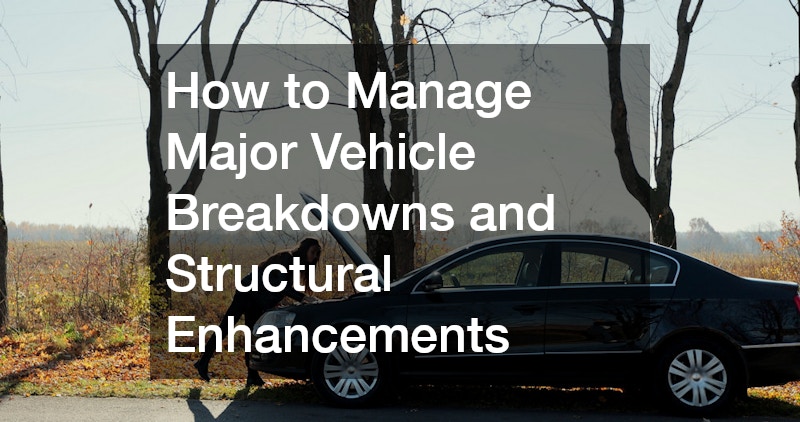
Owning a vehicle is a major responsibility that involves balancing unexpected mechanical emergencies with the desire to personalize your ride. Major mechanical failures can happen when you least expect them, leaving you stranded on the side of the road and facing difficult decisions about whether to fix, rebuild, or scrap your vehicle. At the same time, many drivers look to enhance their vehicles through structural modifications and modern tech installations to improve performance, capability, and driving pleasure.
Navigating the complex world of automotive care requires a clear strategy. Whether you are dealing with a blown powertrain, an unresponsive gearbox, or trying to safely execute a complex chassis modification, understanding your choices is the key to protecting your investment. This guide delivers an in-depth, practical roadmap to help you handle sudden mechanical failures, execute major engine and transmission restorations, select the right body specialists, and confidently navigate functional structural upgrades.
Handling Roadside Emergencies and Immediate Brake Interventions
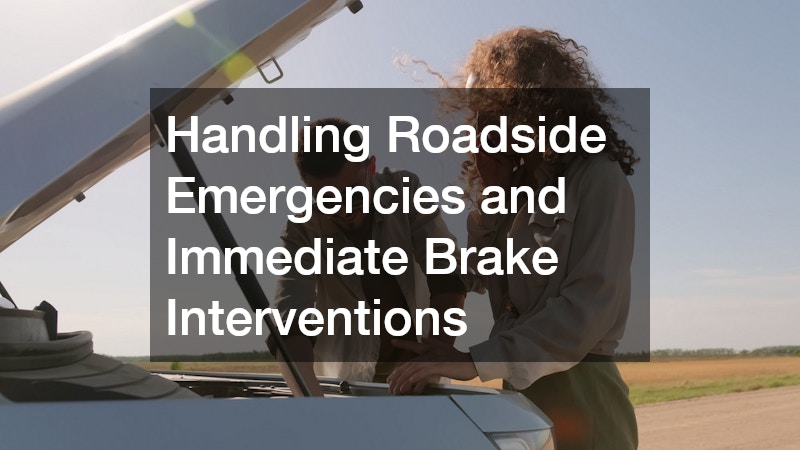
The absolute worst time to figure out a vehicle emergency plan is when you are sitting on the shoulder of a high-speed highway with smoke pouring from your hood. A sudden mechanical failure can happen due to component fatigue, sudden fluid loss, or neglected wear. Knowing how to safely pull over, signal your distress, and secure immediate help is critical to protect your passengers and your vehicle from secondary collisions.
When your vehicle experiences a sudden failure, your immediate focus must be on safely moving out of active traffic lanes. Turn on your hazard lights, steer toward the right-hand shoulder, and bring the vehicle to a complete stop. Once stopped, it is essential to contact a reliable roadside assistance provider who can dispatch a flatbed tow truck to transport your vehicle to a secure facility, preventing further mechanical damage that occurs when towing an already broken vehicle incorrectly.
While catastrophic engine failures are terrifying, losing your ability to stop safely is an immediate safety crisis. Your braking system gives clear warning signs—such as a spongy pedal feel, loud squealing noises, or severe steering wheel vibrations under deceleration—long before a complete failure occurs. Ignoring these signs can lead to caliper lockups or rotor warping that compromises your safety.
To maintain absolute stopping power and prevent minor pad wear from turning into a major financial headache, you should establish a routine checking schedule. Partnering with a professional mechanic for a comprehensive brake repair ensures that your pads, rotors, calipers, and fluid lines are thoroughly evaluated. Catching thin friction material early allows you to replace inexpensive pads before they score your expensive rotors, preserving your stopping capabilities and protecting your safety.
To optimize your emergency readiness and basic safety systems, implement these critical guidelines:
- Program the direct contact information for your preferred emergency towing and support services into your mobile device for quick access.
- Keep a reflective safety vest, heavy-duty jumper cables, a working flashlight, and roadside flares inside your trunk at all times.
- Check your brake fluid reservoir monthly, looking closely for dark discoloration or sudden drops in fluid levels that indicate an active system leak.
- Never pump modern anti-lock braking systems during an emergency stop; instead, apply firm, continuous pressure to allow the computer to regulate traction.
Evaluating Complex Powertrain Failures and Rebuild Options
When a vehicle experiences a major internal mechanical failure, it typically originates in one of two places: the engine block or the transmission casing. These sophisticated powertrain assemblies are the heart of your vehicle, and repairing them requires specialized diagnostic tools, precision machining, and a high level of technical expertise. When these components fail catastrophically, homeowners and drivers face a major financial choice between a complete unit replacement and a custom rebuild.
An internal engine failure can manifest as a thrown rod, a cracked engine block, or severe oil starvation that scores the cylinder walls beyond simple repair. In these extreme scenarios, attempting a superficial patch job is impossible. For vehicles that are structurally sound and retain significant market value, investing in full car engine replacements is often the most cost-effective path to return the vehicle to reliable service, providing you with a fresh powertrain and a robust manufacturer’s warranty.
Disassembling a major system reveals the intricate relationship between mechanical and hydraulic forces. This connection is clearly visible with the vehicle’s gearbox, which transfers rotational energy from the engine to the drive wheels. If your vehicle experiences slipping gears, harsh engagement, or a complete loss of forward motion, you must choose between different restoration paths to fix the internal damage.
When addressing a failed gearbox, you must carefully evaluate the cost and timeline differences between replacing the unit entirely and executing a complete transmission rebuild. A rebuild involves completely disassembling your current casing, thoroughly cleaning all internal pathways, and replacing only the worn components—such as friction bands, scorched clutch packs, internal seals, and damaged gear sets. This targeted approach is frequently more affordable than sourcing a brand-new factory unit, allowing you to salvage the primary structural housing while restoring the internal mechanical components to a like-new condition.
Navigating Factory Replacements and Specialist Garages
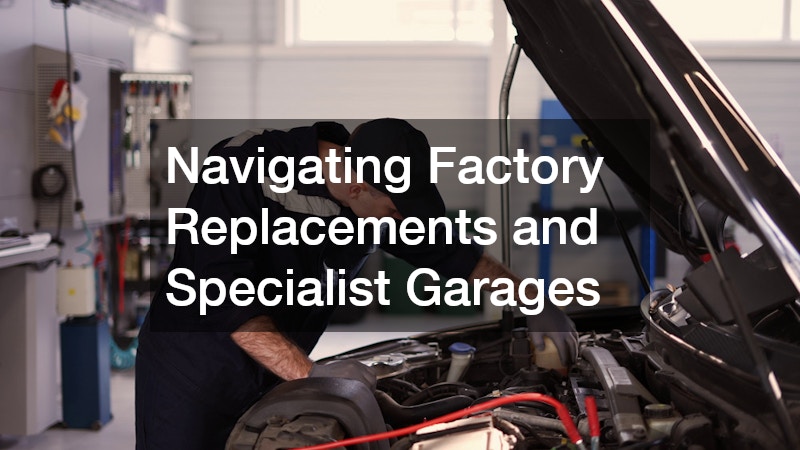
The ultimate success of a major powertrain restoration relies heavily on the precision of your diagnostic work and the quality of the replacement parts used. Modern vehicles are incredibly complex machines that rely on integrated electrical networks and computerized sensors to monitor engine timing, fuel delivery, and gear shifts. Because of this high level of technological sophistication, major automotive work should never be entrusted to general shops lacking the necessary specialty tools.
When a gearbox cannot be reliably rebuilt in-house due to extensive internal fracturing or case damage, you must look for an alternative replacement path. Coordinating comprehensive car transmission repairs through a dedicated specialty facility ensures that your vehicle is fitted with a precisely remanufactured unit that matches your factory specifications perfectly. These specialized technicians possess the electronic flashing equipment required to program the new transmission computer module to communicate seamlessly with your engine, preventing erratic shifting and premature wear.
To ensure these labor-intensive mechanical swaps are completed safely and efficiently, you should look for an established automotive center that possesses advanced heavy lifting infrastructure. These complex procedures require dropping structural subframes, disconnecting high-pressure fluid lines, and removing intricate wiring harnesses without damaging adjacent components.
Choosing the right facility is equally vital when your vehicle requires specialized bodywork or structural restoration alongside mechanical repairs. Entrusting your vehicle to a certified auto body garage ensures that your frame alignment, panel gaps, and structural welds are handled by technicians who follow strict manufacturer repair standards. These specialized garages utilize advanced computer alignment racks to verify that your chassis is perfectly square, restoring the vehicle’s factory crash-safety ratings and ensuring predictable handling on the road.
Executing Structural Liftoffs and Suspension Enhancements
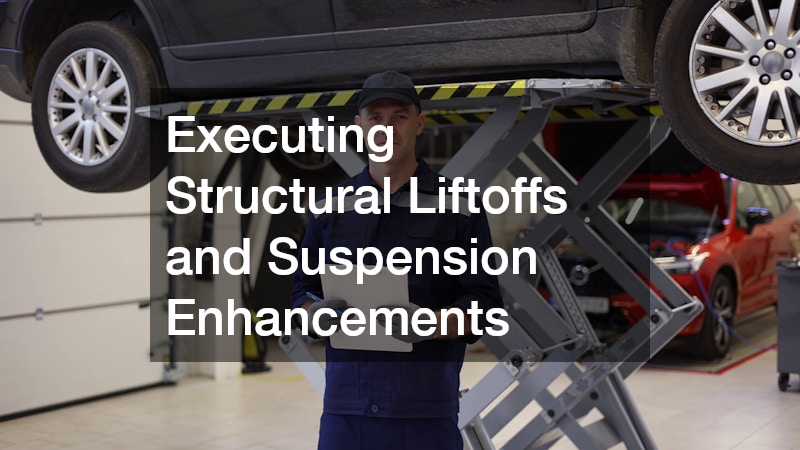
For truck and SUV owners, automotive enhancements frequently move beyond basic maintenance and delve into structural modifications designed to improve off-road capability, ground clearance, and visual presence. Altevehicle’s suspension geometry is a major structural change that has a profound impact on its center of gravity, steering dynamics, alignment tracking, and overall road handling.
When planning to raise a vehicle’s ride height to clear larger off-road tires or improve approach angles on rough terrain, you must avoid cheap, superficial spacer blocks that degrade ride quality and place dangerous stress on factory control arms. Investing in a high-quality, engineered truck lift kit ensures that your upgraded suspension includes longer, heavy-duty control arms, calibrated coil springs, and extended shock absorbers that maintain proper suspension travel and axle alignment under heavy loads.
Modifying your suspension geometry requires a comprehensive approach to peripheral components to ensure long-term reliability. Raising the frame alters the operating angles of your drive shafts, steering linkages, and brake lines, requiring precise adjustments to prevent binding and premature joint failure. To execute these complex structural modifications safely, implement the following steps:
- Select a kit that includes dropping brackets for the differential and transfer case to maintain safe, factory-approved angles for your universal joints.
- Upgrade your factory rubber brake lines to extended, stainless steel braided lines to handle the increased suspension articulation without tearing.
- Schedule a professional four-wheel laser alignment immediately following the suspension installation to correct caster, camber, and toe settings.
- Re-torque all suspension bolts and U-bolts to exact factory specifications after the first 500 miles of driving to account for initial material settling.
Selecting Premium Body Facilities and Diagnostic Centers
Whether your vehicle has been involved in a minor fender bender or requires major structural restoration after an accident, the quality of the bodywork directly dictates its safety, aerodynamics, and long-term resale value. Poorly executed collision work can leave your vehicle vulnerable to hidden rust formation, misaligned panels that cause wind noise, and compromised crumple zones that fail to protect passengers in a subsequent collision.
To return a damaged vehicle to a factory-perfect baseline, you must look past casual repair shops and locate a facility with advanced collision-repair technology. Bringing your vehicle to a reputable local auto body repair shop guarantees that your replacement panels are welded using factory-approved techniques, corrosion-resistant primers are applied correctly, and the final paint coats are baked in a specialized down-draft booth to ensure a flawless, matching finish.
To protect yourself from hidden structural flaws and inflated repair bills, use the following vetting criteria when choosing a body repair facility:
- Verify that the shop holds formal certifications from major vehicle manufacturers, indicating that their technicians are trained in handling high-strength steels and aluminum alloys.
- Confirm that the facility provides a comprehensive, written lifetime warranty covering all paint adhesion, body filler work, and panel alignment.
- Request a detailed, itemized computer estimate that explicitly separates labor hours, paint materials, and original equipment manufacturer parts from aftermarket alternatives.
- Ensure the shop utilizes computerized digital measuring systems to prove your frame has been returned to its exact factory dimensions before authorizing final paint applications.
Once structural alignment is confirmed, your attention should turn to comprehensive electronic health checks. Modern vehicles utilize onboard diagnostic systems to monitor everything from airbag deployment sensors to traction control modules. Partnering with a facility that delivers comprehensive auto repair services guarantees the vehicle’s electronic infrastructure is fully scanned, calibrated, and cleared of any fault codes before you take delivery.
Customizing the Cockpit With Integrated Technology Upgrades

Once a vehicle’s powertrain is fully optimized, and its structural integrity is secured. You can focus on modern technological enhancements designed to improve daily driving comfort, connectivity, and acoustic performance. The interior cabin of an older vehicle can quickly begin to feel outdated due to fading displays, a lack of smartphone integration, and muddy, distorted sound quality from factory speakers.
Upgrading a vehicle’s infotainment and acoustic systems is a fantastic way to revitalize an aging cockpit, turning your daily commute into a luxury experience. Planning a comprehensive car audio upgrade allows you to replace primitive factory paper-cone speakers with high-fidelity component systems, add compact subwoofers for rich low-frequency response, and install a modern touchscreen head unit featuring wireless smartphone integration, real-time navigation, and integrated backup camera inputs.
Executing a high-end electronics installation requires meticulous attention to automotive wiring standards, power management, and acoustic insulation. Modern automotive electrical systems are highly sensitive to voltage drops, meaning that adding powerful amplifiers requires proper circuit protection and dedicated power lines run directly from the battery. To ensure your acoustic upgrades deliver crisp, rattling-free performance, implement these clean installation practices:
- Apply thick butyl-rubber sound-dampening mats inside the door cavities to eliminate panel vibrations and block intrusive road noise.
- Utilize vehicle-specific wiring harnesses and mounting adapters to prevent cutting your factory wires, preserving your electrical system’s integrity.
- Install an inline fuse block as close to the battery terminal as possible to protect your new electronics from sudden electrical surges.
- Adjust the gain and crossover settings on your external amplifiers correctly to prevent speaker distortion and ensure balanced sound staging across the cabin.
Conclusion
Managing major vehicle breakdowns and executing structural upgrades is an ongoing responsibility that demands careful planning, strategic investments, and a commitment to professional craftsmanship. By shifting away from temporary, superficial quick-fixes and choosing robust engine and transmission restorations, professional body repairs, and engineered suspension enhancements, you can ensure your vehicle remains safe, reliable, and capable for years to come. These proactive maintenance and upgrade strategies protect your financial investment and give you total confidence behind the wheel, regardless of road conditions. Do not wait for a mechanical failure to force your hand; take active command of your vehicle’s maintenance schedule today, vet your local service specialists early, and build a reliable network of automotive professionals to keep your vehicle performing at its absolute peak.