After a vehicle accident, choosing where to have repairs completed can feel like another difficult decision. You may be arranging transportation, speaking with an insurer, and trying to understand the damage at the same time. Although getting back on the road matters, taking time to compare repair providers can help you make a more informed choice.
The right collision repair center should be able to explain its capabilities, communicate clearly, and answer questions about the proposed work. Looking beyond convenience or an initial estimate gives you a better understanding of what to expect throughout the repair.
Look for Relevant Vehicle Experience
Start by asking whether the shop regularly repairs vehicles like yours. Experience with your vehicle’s make, model, and materials is more useful than a broad statement that the business handles all types of damage. Describe the accident and ask whether the team can evaluate the concerns you have noticed.
Ask about technician training and any credentials the business advertises. Have the staff explain what those qualifications cover and whether they relate to your vehicle. A clear explanation helps you assess their relevance without relying on logos or unfamiliar terminology.
Read Reviews for Consistent Patterns
Customer reviews can reveal how a shop handles communication, scheduling, and concerns after pickup. Read several detailed accounts instead of focusing exclusively on an overall rating. Look for repeated observations about whether customers received updates and understood changes to their repairs.
When evaluating a collision repair center, consider how the business responds to criticism as well. Professional, specific responses may offer insight into how staff approach customer concerns. Recommendations from friends or relatives can also help, especially when they describe a recent repair experience.
Request a Clear Written Estimate
An estimate should give you a useful explanation of the proposed work. Ask staff to walk through the listed repairs, parts, and labor so you understand what each item addresses. If something is unclear, request clarification before authorizing the work.
When comparing estimates, look at differences in scope instead of judging only the totals. Ask whether each proposal addresses the same damage and includes comparable parts. You should also understand how the shop will contact you if further inspection identifies additional damage or changes the proposed work.
Discuss Repair Capabilities and Outside Work
Before selecting a collision repair center, ask which parts of the job it performs onsite and whether any work requires another provider. This conversation can help clarify who coordinates the repair and who will answer questions about its progress.
Ask how the team determines the repair procedures appropriate for your vehicle. If the estimate includes inspections, measurements, or work involving vehicle technology, request an explanation of why those steps are needed. You do not need technical expertise to expect understandable answers.
Establish Communication and Scheduling Expectations
A collision repair center should provide a clear point of contact during the job. Ask how updates are delivered, how often you can expect them, and whom to contact if you have questions. Consistent communication makes it easier to arrange transportation and respond to decisions that require your input.
Discuss the expected timeline and what could affect it. Ask whether the schedule depends on further inspection, parts availability, or other outstanding steps. An explanation of those dependencies is more useful for planning than a completion date without context.
Review Written Terms Before Committing
Ask about any written warranty offered for the repairs and review its coverage, exclusions, and claim process. Avoid assuming that every part of the job carries the same terms. Keep copies of the estimate, authorization, and final repair paperwork for reference.
Before pickup, ask how the completed work will be explained and what to do if a concern appears afterward. Knowing whom to contact gives you a practical next step if you have questions once you resume driving.
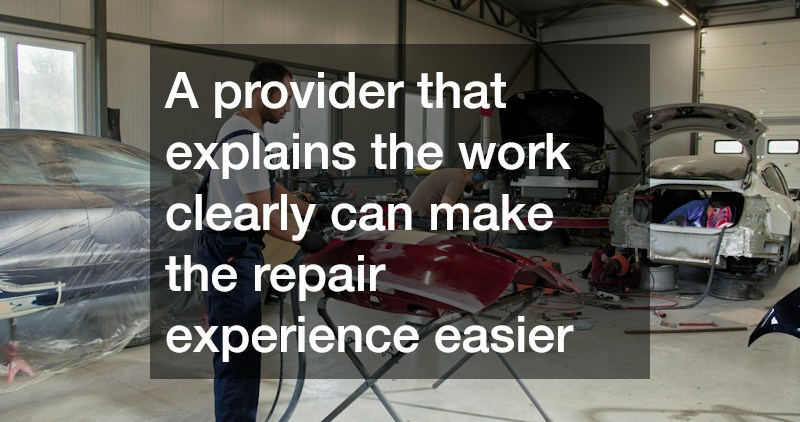
Finding a collision repair center involves weighing relevant experience, clear documentation, communication, and the proposed repair approach. Take time to compare answers and resolve uncertainty before committing. A provider that explains the work clearly can make the repair experience easier to navigate.